Draft
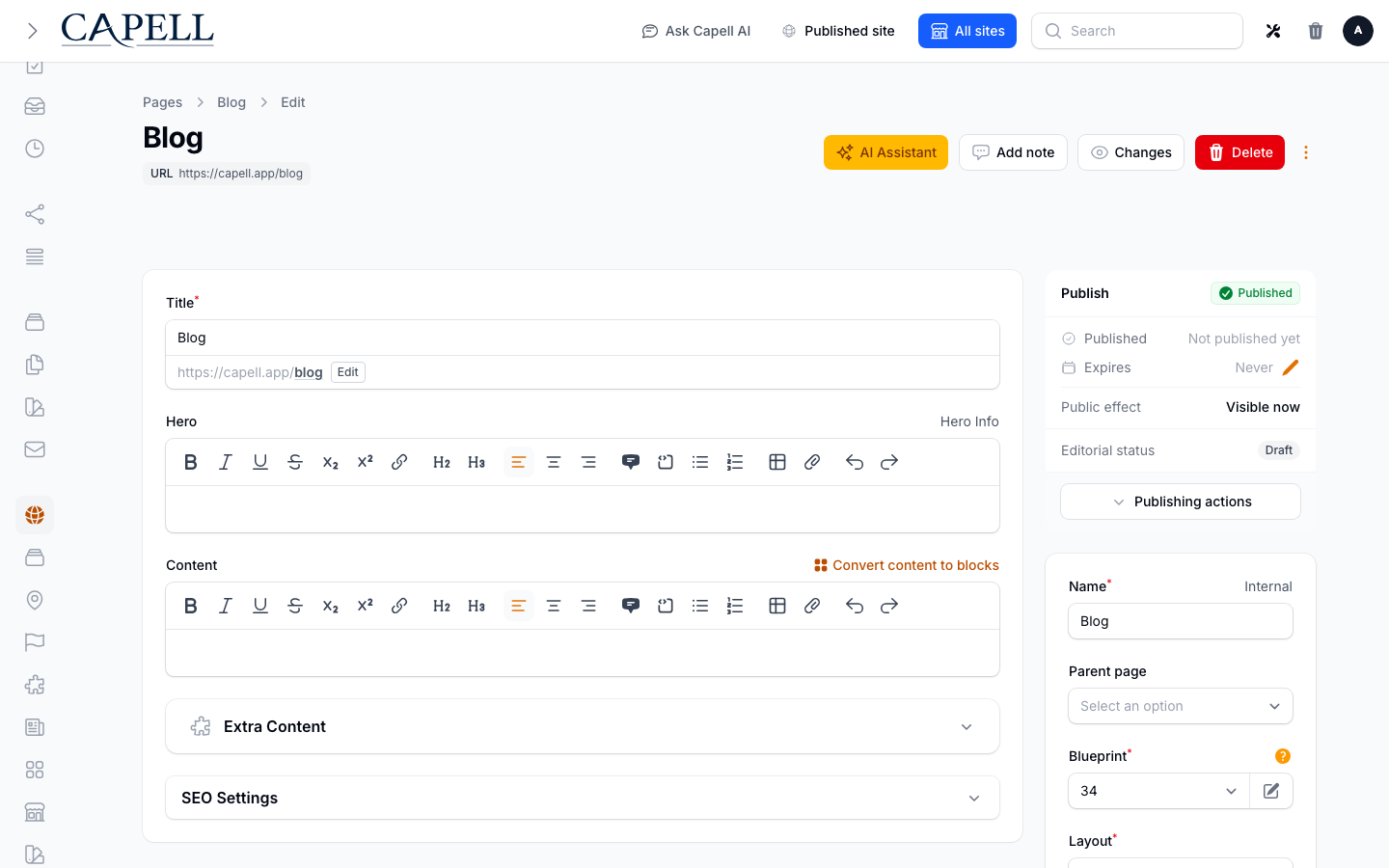
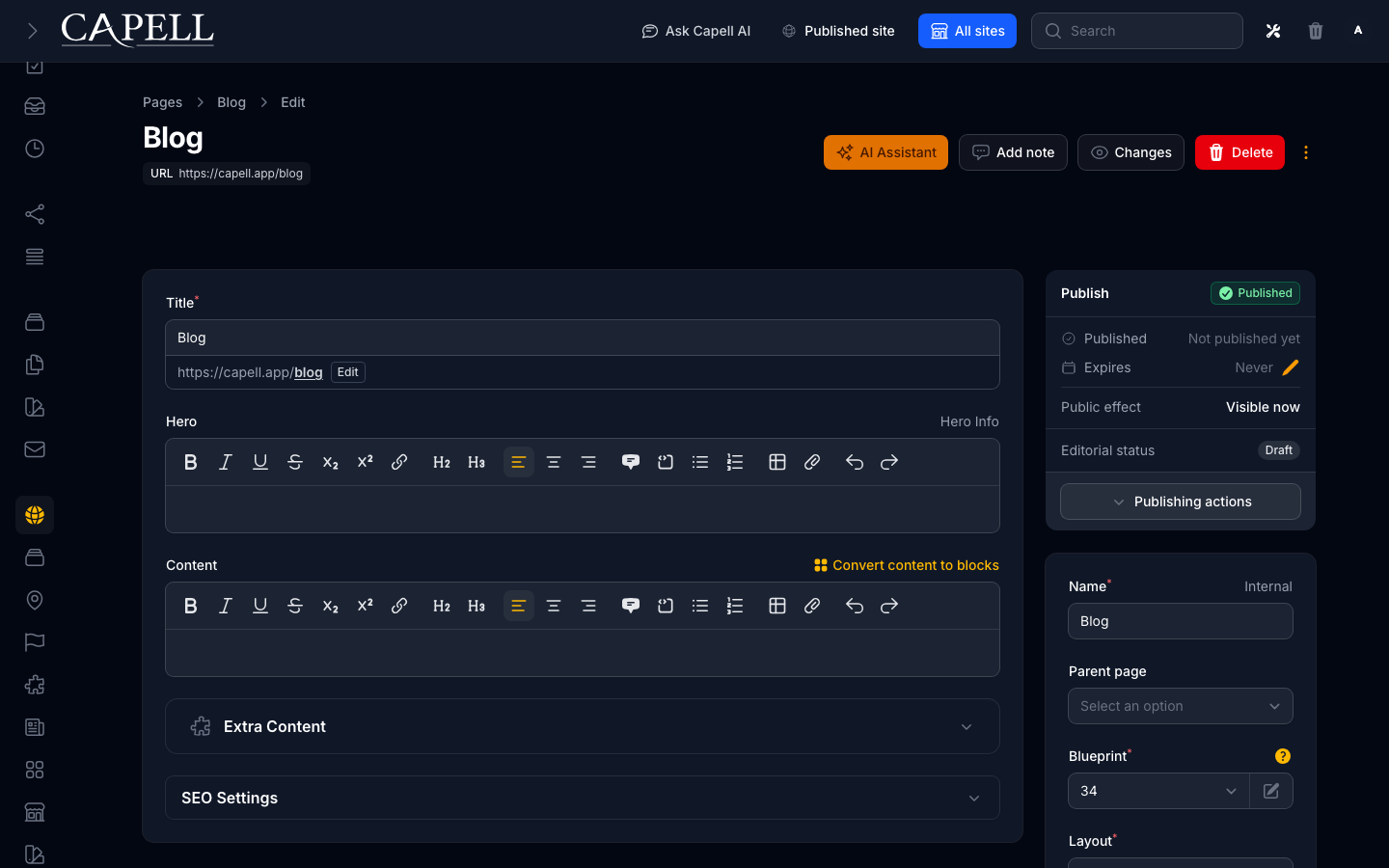
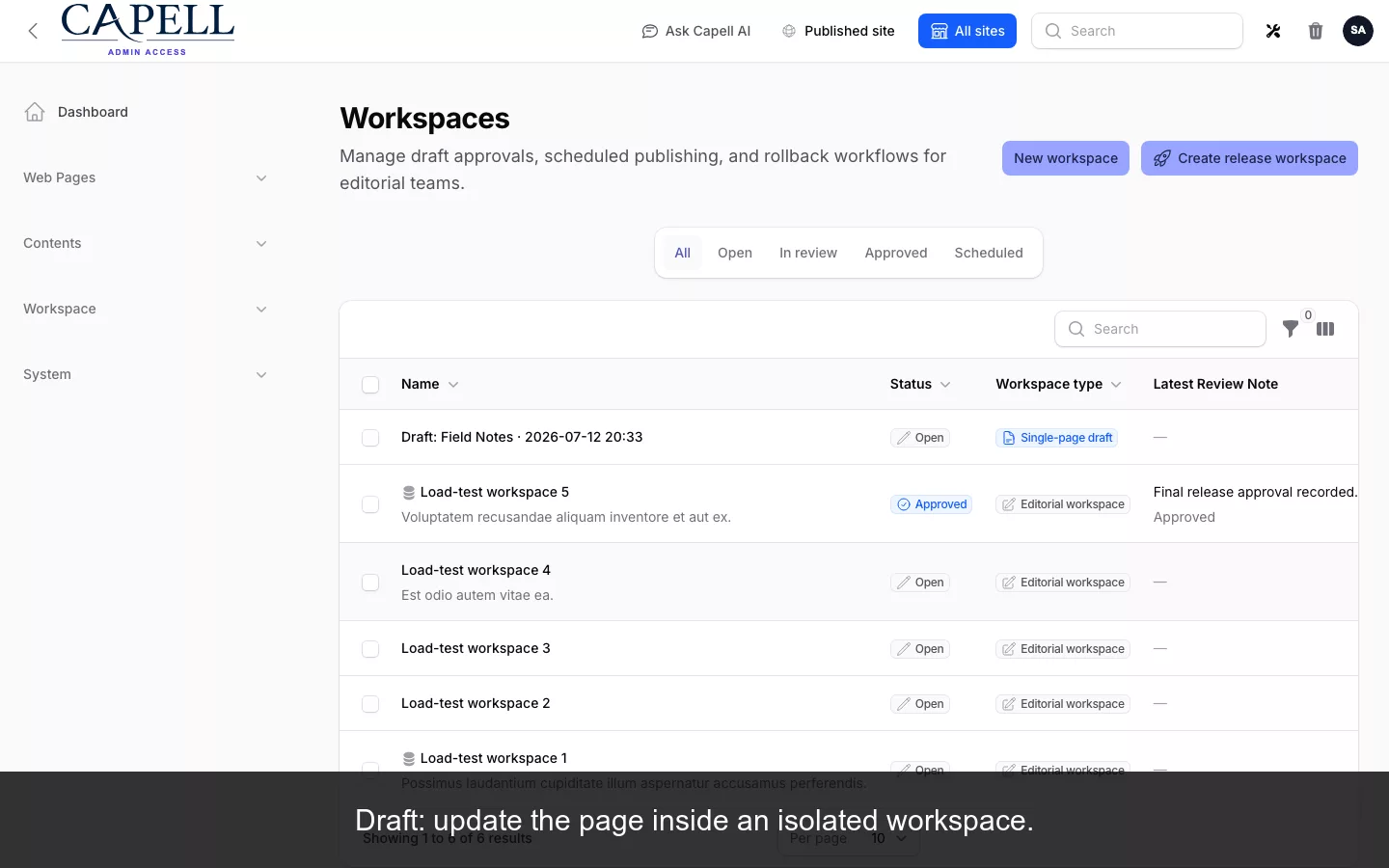
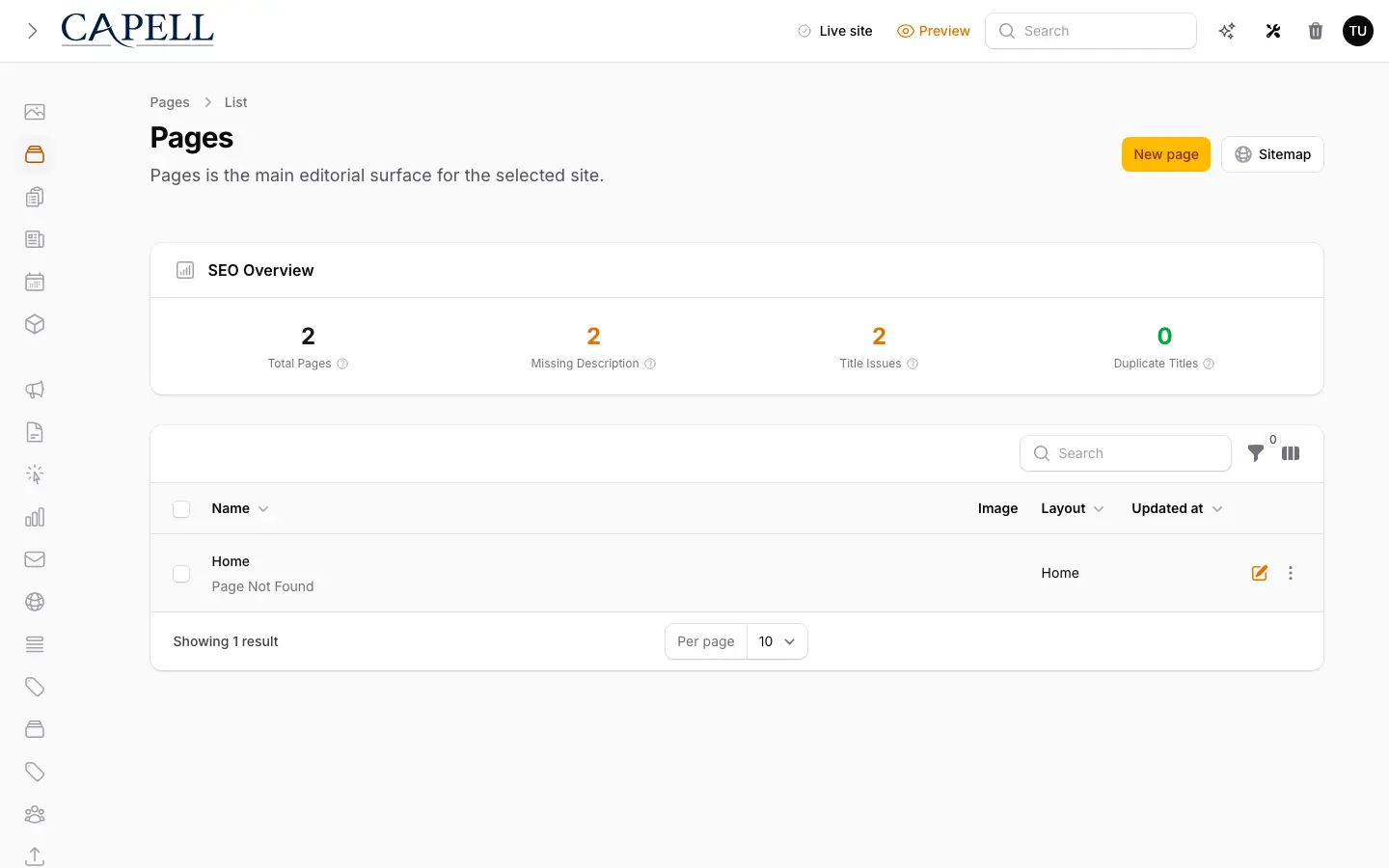
Edit the Page in a structured Filament workspace while the public version stays unchanged.
Choose which optional cookies Capell may use.
Required for Capell to work — login, security, page rendering.
Anonymous usage telemetry to improve editor performance.
Personalization for the Capell marketing site.
Capell is in assisted design-partner beta. Foundation is £0 under the MIT licence, the live demo is open, and checkout remains closed while the commercial path is validated.
Capell keeps publishing inside the Laravel application, gives Pages a recoverable history, and leaves the public frontend with the team that builds it.
Capell records Page changes because client work rarely fails at the neat moment a CMS comparison table describes.
The other path
The Capell path
A rushed edit replaces the last known-good Page and leaves the team comparing screenshots.
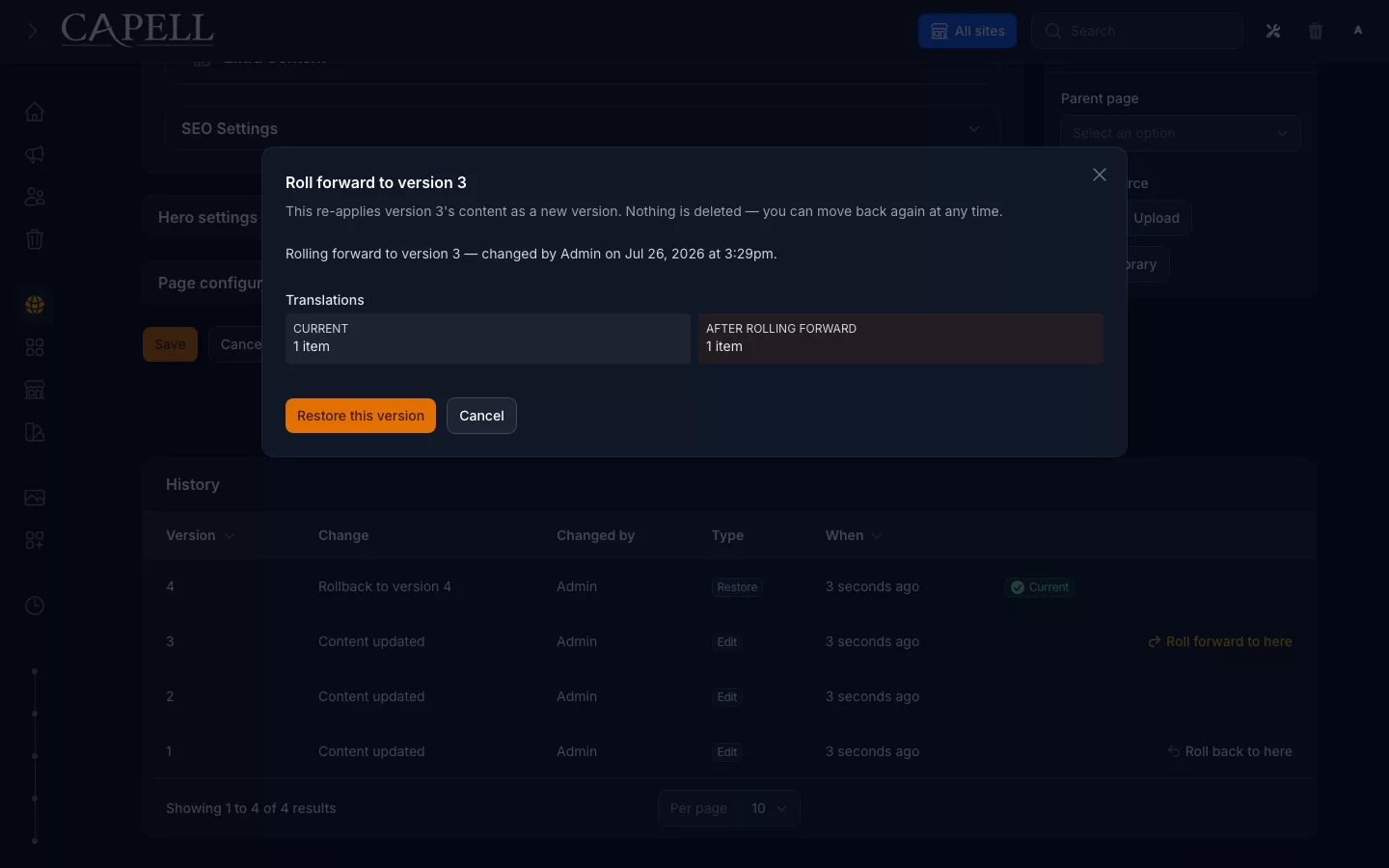
The save becomes another Page event, so the earlier state remains available.
Chat logs and memory become the audit trail.
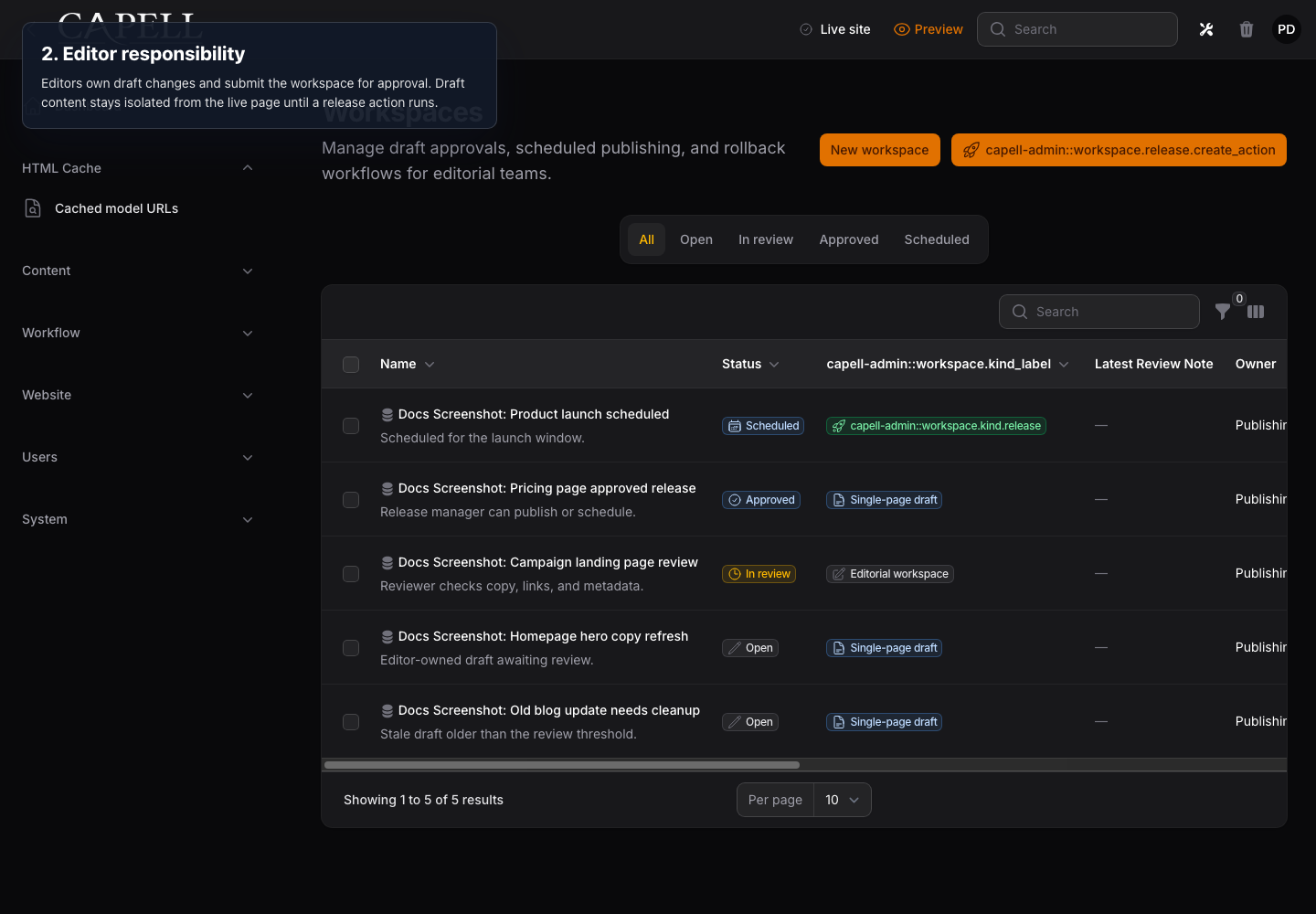
The Page history records the sequence; Publishing Studio adds reviewer assignment and approval.
Recovery means reconstructing content or restoring more data than the Page that changed.
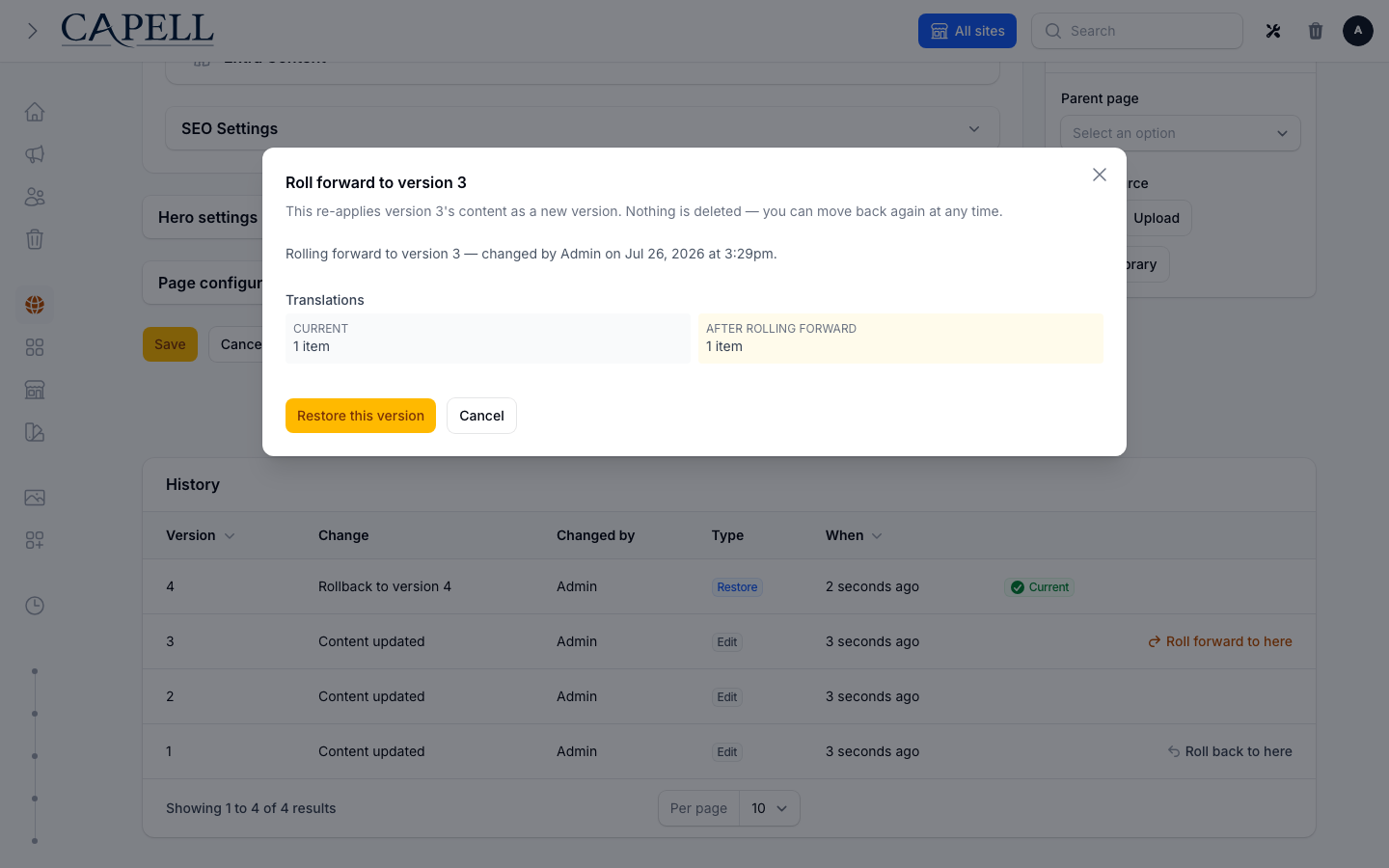
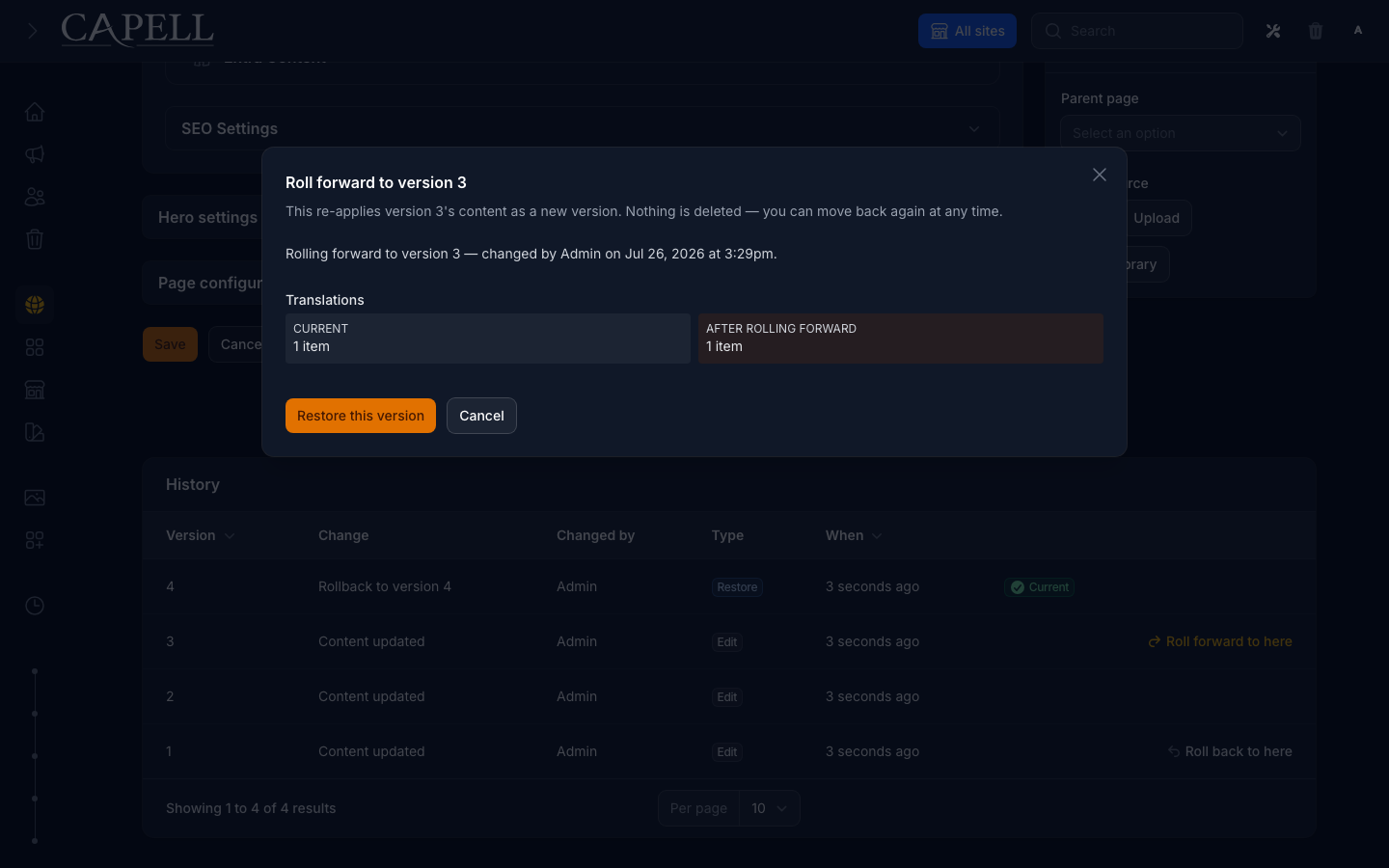
Preview the Page diff, validate the target state, then restore or roll forward.
Project-specific glue turns framework updates into archaeology.
Installer, upgrade and doctor commands keep the lifecycle explicit and testable.
The next developer inherits conventions that exist only in the previous developer's memory.
Page, layout, package and public-rendering boundaries remain visible in the Laravel codebase.
Every Capell site gets drafts, preview, Page History and restore. Publishing Studio adds approvals, assignments and coordinated releases.
Edit the Page in a structured Filament workspace while the public version stays unchanged.
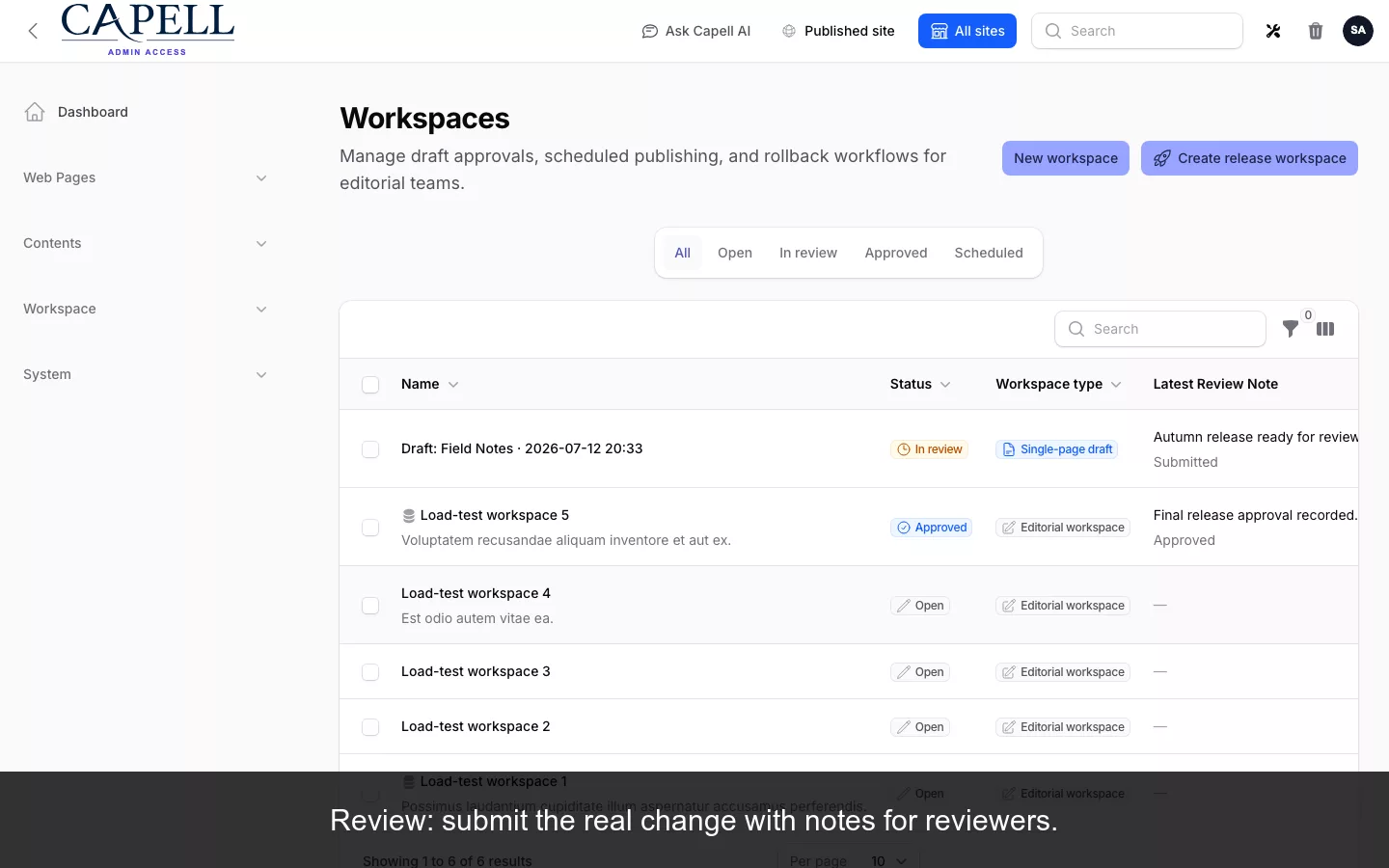
Preview the real Page and inspect the proposed change before making a publishing decision.
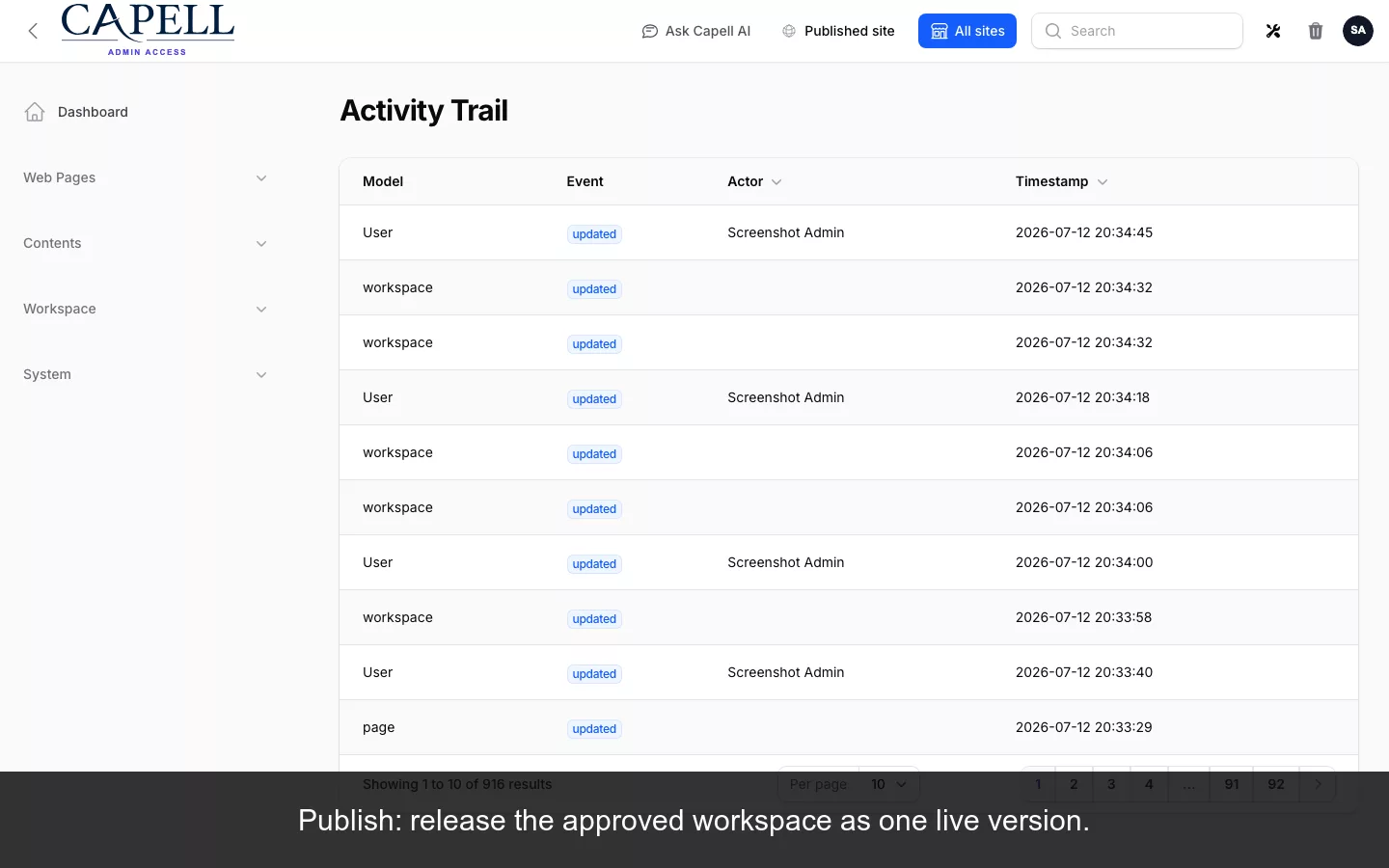
Release the approved Page through the workflow available to that Capell installation.
Read the Page history, compare states, and restore a validated earlier version when needed.
Six closed decisions explain what Capell optimises for and what it deliberately gives up.
We kept the CMS inside the application on purpose. Each decision is useful only when its trade-off also fits your project.
Capell.app and the public demo run on Capell. Check the source, follow the dated evidence, and treat an absent metric as an intentionally withdrawn claim. Priority support costs £49 and is refunded automatically if the two-business-day first-response target is missed.
Track redirect health as an operating concern instead of discovering dead paths from visitors.
See deliveryManage several sites while previewing the effect of destructive site-level work.
Read the owner pathKeep alt text and related media context aligned with the language presented to visitors.
See contentAdd optional capability through Composer packages whose release state remains visible.
Browse extensionsKeep presentation replaceable and run explicit checks against the installed theme contract.
Browse themesLet external agents inspect approved capabilities without granting silent publishing authority.
See the agent boundaryThe same architecture pays back differently for delivery teams, product teams and individual developers.
Choose the path closest to the decision you need to make next.
Agencies
Reuse Page, upgrade and handover conventions while each application keeps its own frontend.
Read the agency pathProduct teams
Give editors a bounded workspace and share the live demo with the developer who owns the application.
Read the editor pathSolo developers
Install the MIT-licensed base, inspect the contracts, and add paid workflow only when the team needs it.
Install FoundationPages are the supported aggregate today. Other content remains outside that promise.
Developer-owned structure remains the current default while the product tests safer composition.
New claims should arrive with a current, checkable source and disappear when it expires.
One request moves through Laravel routing, a Page with event history, a blueprint and the application's own presentation. The boundary stays inspectable without a second runtime round trip.
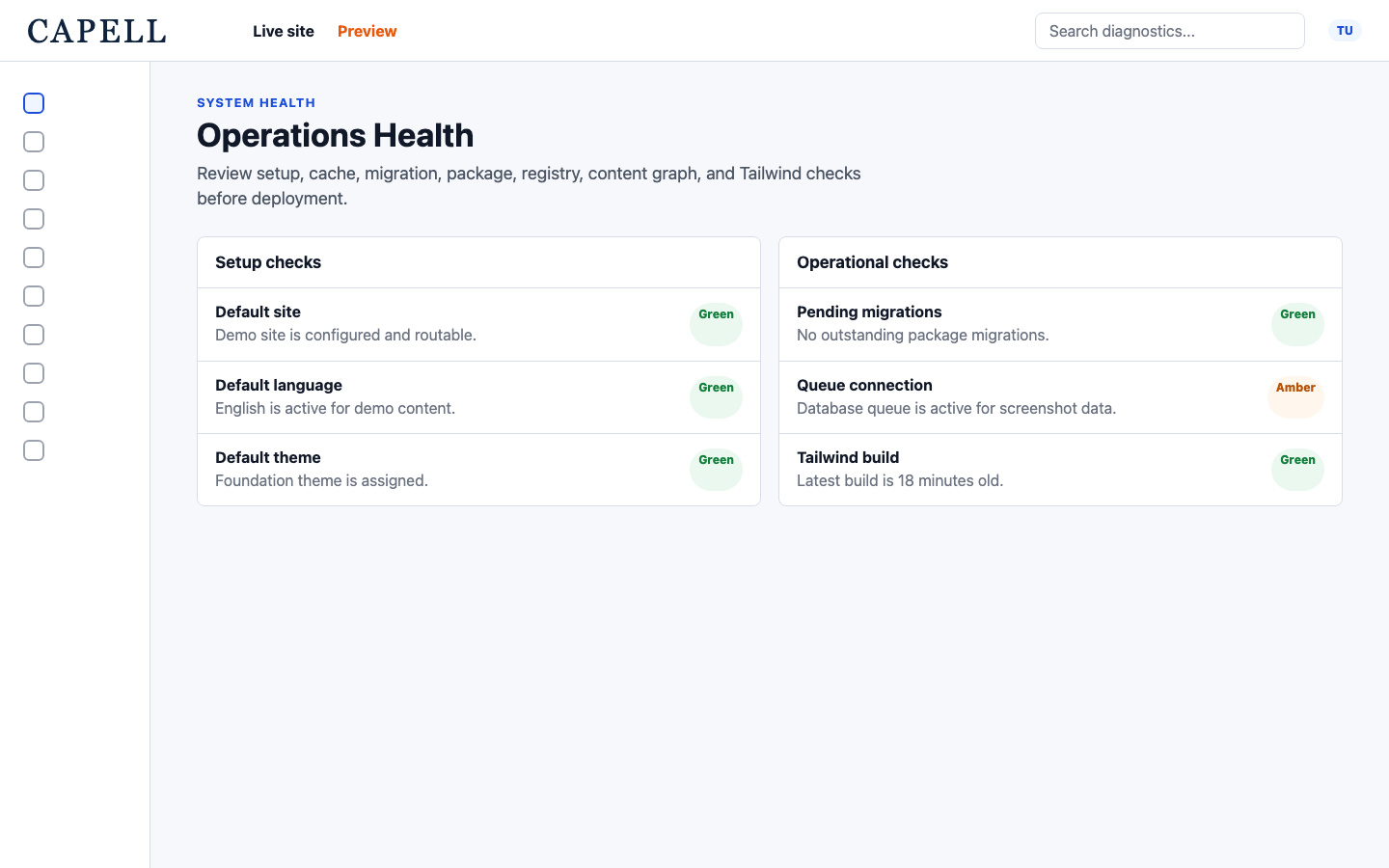
capell:install, capell:upgrade and capell:doctor give teams one repeatable operating path. Agencies can apply the same checks across a fleet while each application keeps its own code, database and release decision.
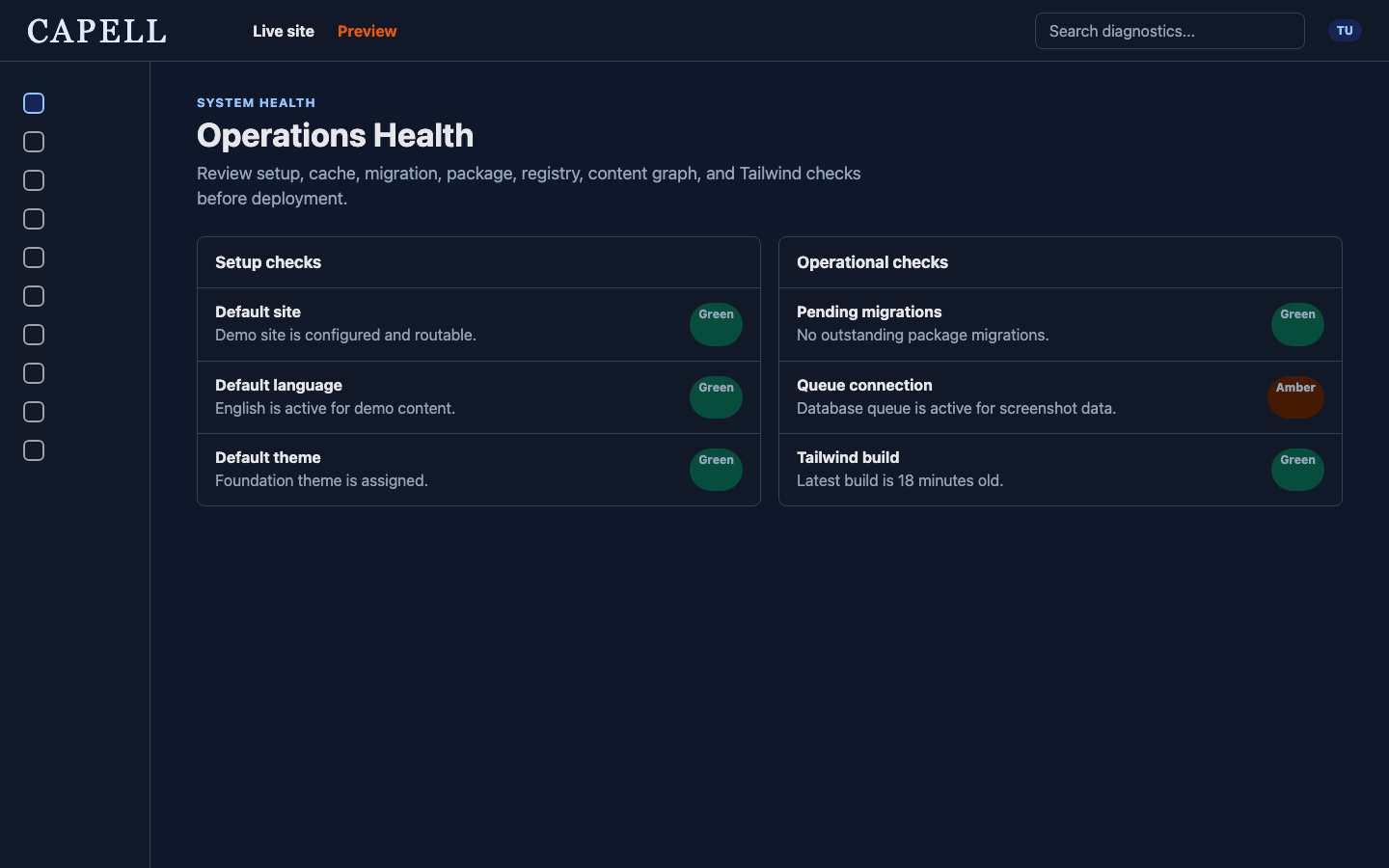
The screenshot is a real readiness surface. It is evidence of the command shape, not a promise that every check will pass on every installation.
Use these questions to disqualify Capell before a pilot costs the team time.
Choose a separate content platform when several unrelated applications must consume the same content through an API. Capell is coupled on purpose: it belongs inside the Laravel application.
Not yet. Capell is in assisted design-partner beta, and public checkout stays closed until the commercial canary is complete. Foundation remains available under the MIT licence.
It can be when the sites share a delivery method and your team values repeatable upgrades, Page recovery and reviewed packages. Confirm the licence and package fit before standardising.
Capell is founder-maintained and early. The Foundation source is MIT licensed, paid-package continuity terms are published, and the current operating limits are stated plainly.
Build directly with Filament when a few resources and custom pages are enough. Choose Capell when Pages, URLs, Page history, layouts, themes, publishing and package lifecycle should share one maintained contract.
Staying put is a valid outcome. Keep the current CMS when it already fits the team, the migration cost exceeds the maintenance cost, or Capell's early stage adds risk you do not need.
Follow the Foundation recovery track: open a Page, inspect its history, preview the difference and trace the restore path.
A specific test Inspect the recovery path rather than taking a rollback claim on trust.
The live demo is open; site planning is available during the assisted design-partner beta.
Agencies can use the demo as a shared evaluation path. If the timing is wrong, follow the newsletter for release evidence and checkout readiness. Foundation is £0 under the MIT licence; public checkout remains closed.