Capell home
Live demo

A publishing CMS that leaves the application in your hands

You keep a normal Laravel application, ordinary Composer packages, your own database and your own frontend. This page covers the parts of that arrangement that are not in the code: who builds Capell, how it is funded, and what you are left holding if it ever stops.

I build and maintain Capell independently, and I publish the ownership boundary because customers should know what remains theirs if the business changes.

Self-hosted in your application MIT-licensed foundation Continuity boundary in writing
Clear Capell operating agreements arranged with consent controls, revision layers, support correspondence, and stewardship evidence.

Capell is a publishing CMS for Laravel applications built with Filament, funded through memberships, packages and support, and maintained by Ben Johnson.

Who builds Capell, and how the work is paid for

What Capell is

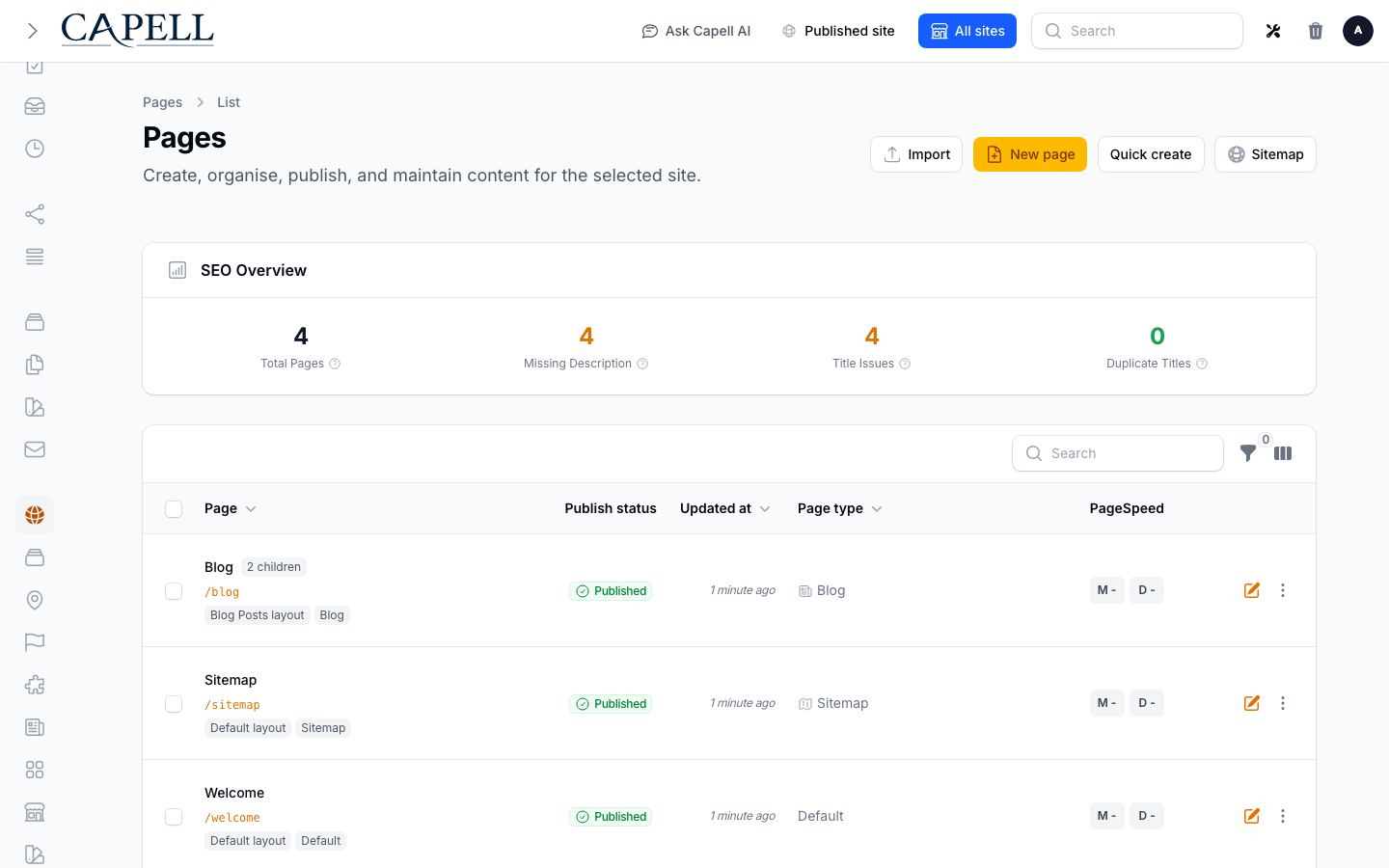
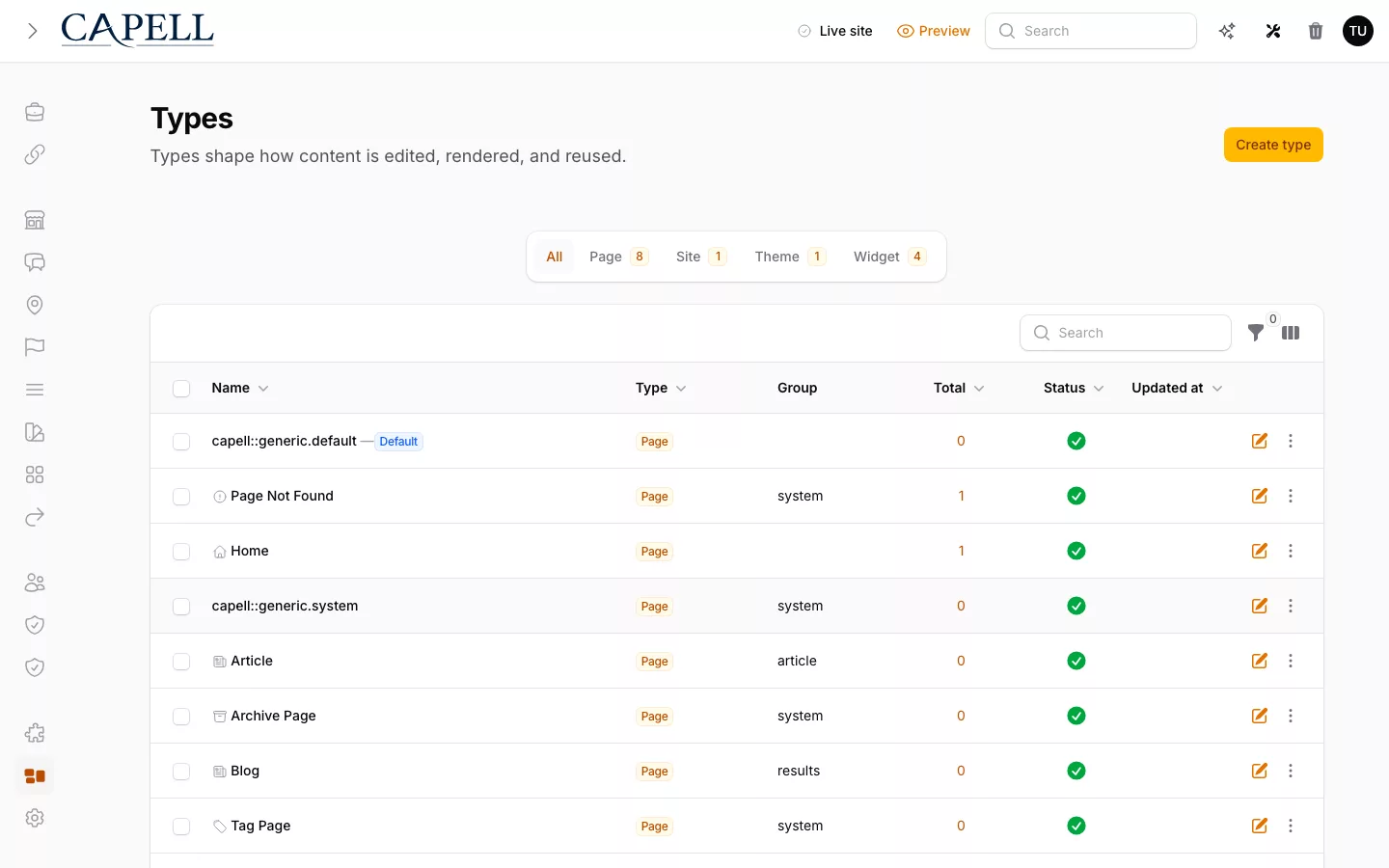
Capell is a publishing CMS installed into a Laravel application built with Filament. It contributes page types, layouts, URLs, redirects, previews, revision history and publishing to an application you continue to own and deploy yourself. There is no hosted runtime and no proprietary content store. Read the product decisions and their trade-offs.

Who builds it

Ben Johnson founded and maintains Capell. It is an independent sole-trader business, and the practical consequence is worth being direct about: the maintainer list is short, so the protections that matter are the ones written down rather than implied. The foundation is MIT licensed, support windows are published to real dates, and a discontinued first-party package has its source released under the same terms.

How it is funded

Capell is funded by what customers pay for it: memberships, first-party packages and support. There is no outside investment, no venture funding and no advertising, so no third party holds a claim on the roadmap or a reason to push the product somewhere its users would not choose. Capell does not publish revenue figures or customer counts, and treats a number it cannot source as no number at all.

Where users talk

Capell uses GitHub Discussions as its public community venue for questions, ideas and shared implementation experience. Security reports and private support requests must still use their dedicated routes. Contact Capell for business or support enquiries.
Continuity

Define the continuity boundary explicitly

Installed code remains with the customer. Protected source, downloads, updates and support stay governed by the commercial terms accepted at purchase.

This is the answer to the question a short maintainer list makes reasonable: what happens if Capell permanently stops trading. It is a standing commitment of the business, so it carries no date and does not depend on any one person remaining available.

Continuity boundary Standing commitment
What stays yours
Customer applications, content, frontend code and installed Capell code remain with the customer.
Installed packages
Installed packages keep running under their existing terms.
Protected access
Access to protected first-party package source, downloads, updates and support remains governed by the commercial terms accepted at purchase.
Signed

Capell

Given by the business rather than by an individual, so it does not lapse with any one person.

Public record

What has actually shipped, with dates

A short public record rather than a full history. Every entry links to the source that proves it, so none of it has to be taken on trust.

Capell is young, and a young product should be checkable rather than reassuring. These are the dated points that changed what a customer can rely on.

  1. First public Capell package: a Blade coverage plugin for Pest

    The testing tool came before the CMS. It measures Blade template coverage under Pest, and Capell's own packages are held to it.

    View it on Packagist
  2. The Foundation packages published publicly under MIT

    Core, admin, frontend, installer and marketplace went to Packagist as public MIT packages on the same day. That licence is what makes the continuity boundary above enforceable rather than aspirational.

    View capell-app/core on Packagist
  3. The paid-package licence published as a dated, versioned document

    Commercial terms are pinned to the version accepted at purchase. A later version does not silently replace the one recorded against an existing purchase, so the terms cannot move underneath a customer.

    Read the 2026-07-22 package terms
  4. The first free companion packages published

    Filament Peek, media library, block library, welcome tour and site stats were released as separate installable packages, establishing that optional features live outside the foundation rather than inside it.

    Browse the published packages
Loading footer