Capell home
Live demo

Explore Capell screens and examples

Use these screens to judge visible output and workflow before opening the demo or a package listing. They come from Capell itself, not customer projects or evidence of independent adoption.

First-party examples Linked sources Visible product output

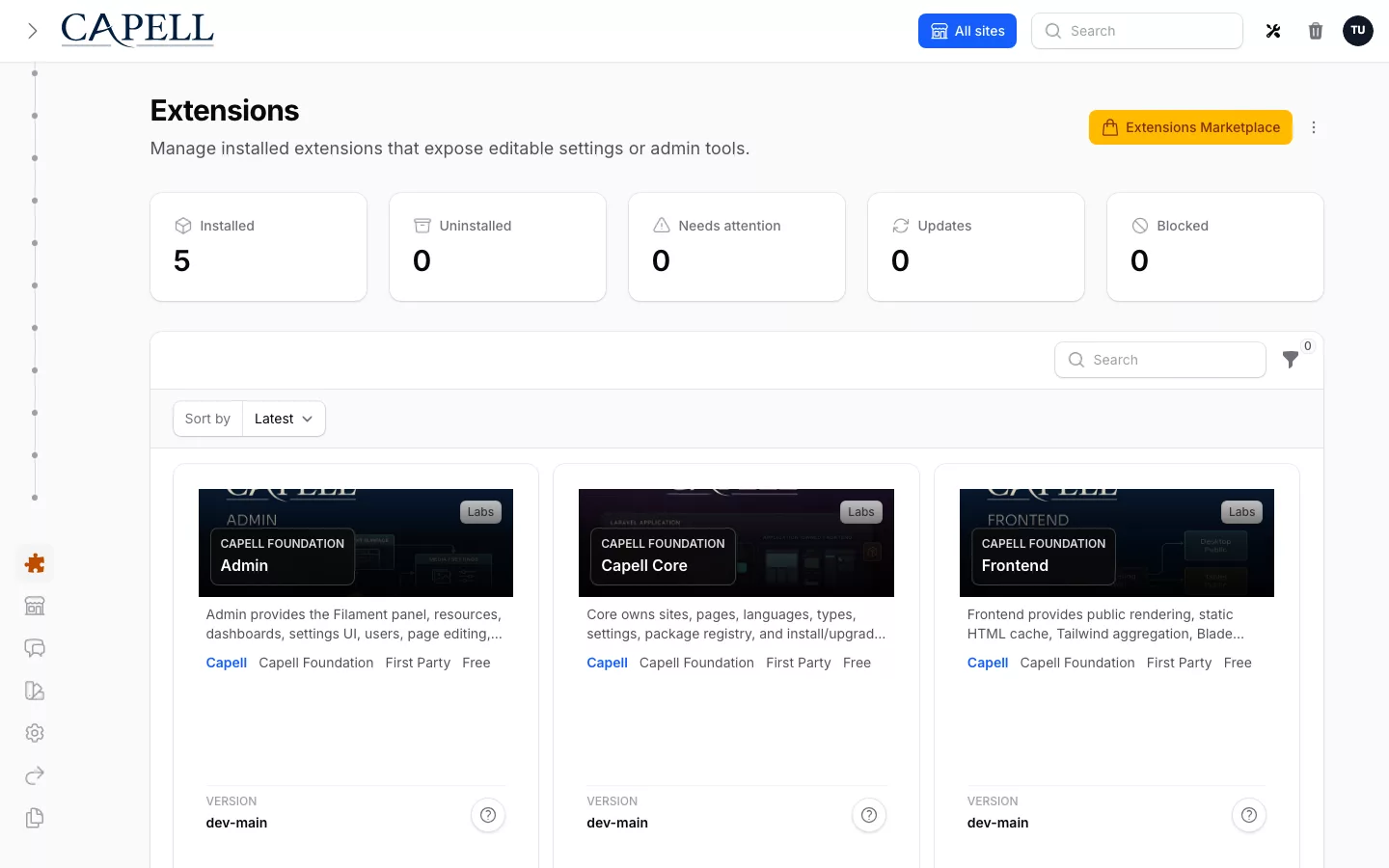
Tour Capell's content model, Filament workflow, public rendering boundary, operations, and extensions.

Watch on YouTube

Finished first-party examples

See finished pages with the editor views behind them

These are Capell's own pages, not customer case studies. Open the finished output, read the change it represents, and inspect the editor evidence without entering an authoring session.

First-party example / capell.app

How we built capell.app

The Capell site is itself the first finished example: structured pages, named layout areas and a public frontend composed from the same application-owned records.

Finished public page

Open the actual first-party page this story describes, then compare it with the recorded editor evidence below.

Open the finished capell.app page
Editor views behind this change

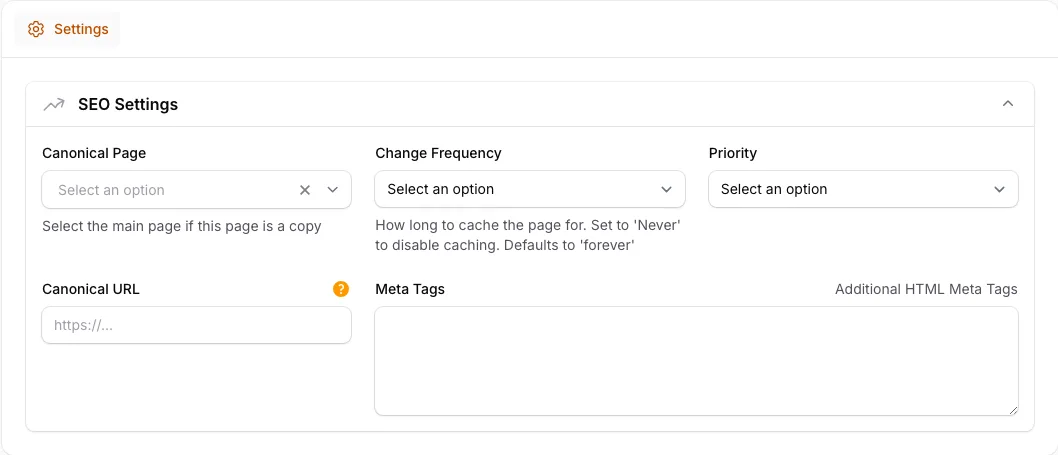
The homepage change recorded here moved the product workflow into explicit content, layout and operations sections so the page can be edited as a structured Capell document rather than a one-off template.
How we built capell.app

Actual Capell CMS Pages index showing its SEO Overview and columns for Page, Publish status, Updated at, Page type, and PageSpeed.

First-party example / publishing workflow

A reviewed release, from draft to publish

The publishing workflow page shows a finished Capell page backed by an editorial change that remains visible through draft, review and publish states.

Finished public page

Open the actual first-party page this story describes, then compare it with the recorded editor evidence below.

Open the finished workflow page
Recorded editor workflow views

The page change documented here separates the proposed content from the publish decision: a reviewer can inspect the change and its readiness before the public page is updated.

A reviewed release, from draft to publish

Captioned frame from the real Publishing Studio workflow recording showing an editor preparing a draft change.

First-party example / public delivery

The public site remains an application boundary

A finished public delivery page demonstrates the hand-off: page structure and release checks belong to the Laravel application, while anonymous visitors receive clean HTML.

Finished public page

Open the actual first-party page this story describes, then compare it with the recorded editor evidence below.

Open the finished delivery page
Editor and public-output evidence

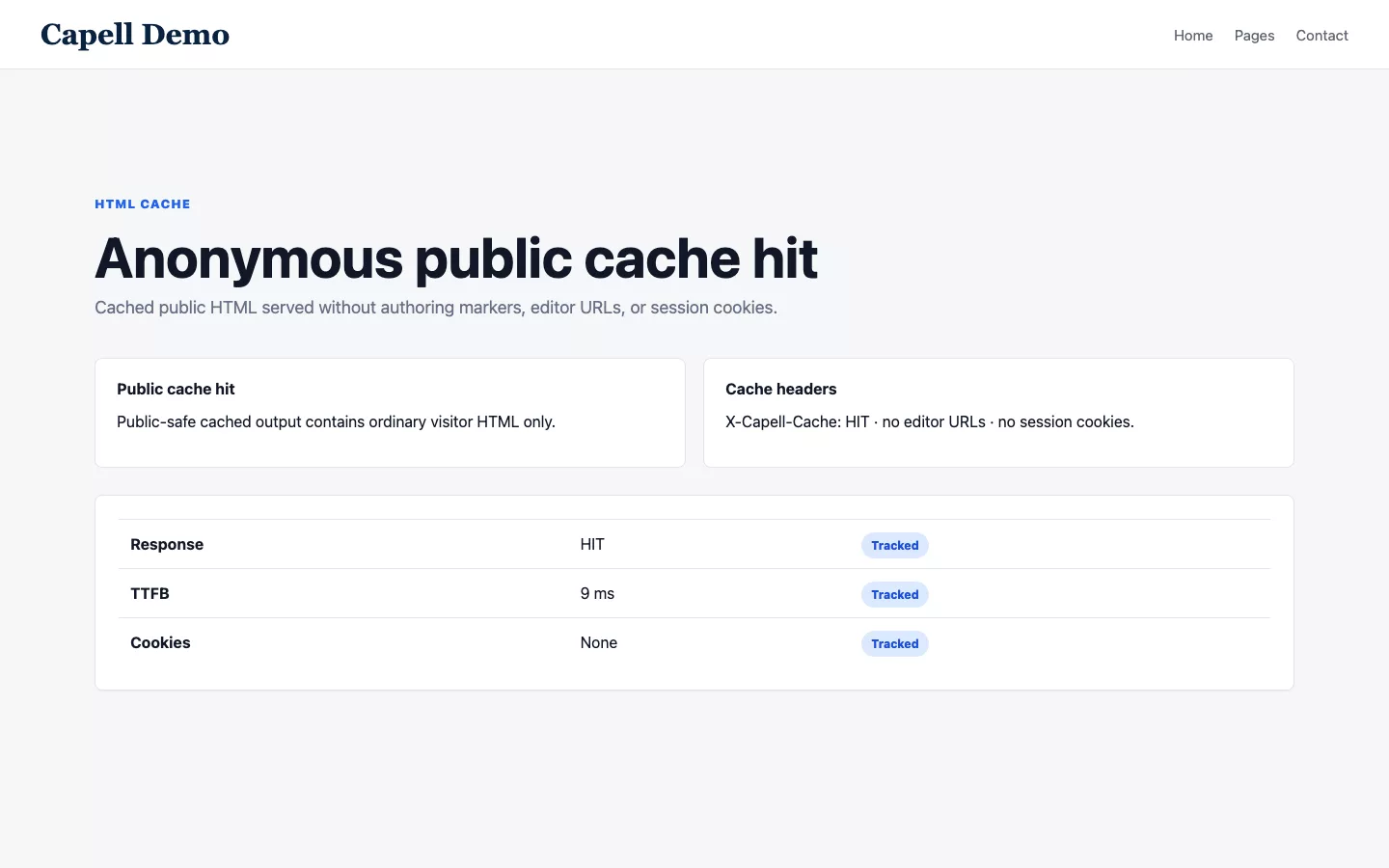
The page change documented here makes the public hand-off explicit: page types and delivery checks are reviewed in the application, then the public result is served without authoring context.

The public site remains an application boundary

Actual anonymous public Capell page showing a cache hit without editor controls, authoring markers, or signed preview data.

Launch film

The launch film: recovery, ownership, and release scope

Every page save appends a full-state revision, so Tuesday's mistaken edit can be compared field by field, rolled back, or rolled forward with its history intact. Page types, layouts, URLs, and publishing rules stay structured records in your own Laravel application, edited in a Filament admin and rendered by your own frontend. Capell arrives as Composer packages: a free, MIT-licensed Foundation plus catalogue extensions reviewed release by release, so you can read what each one migrates, touches, and removes before it ever installs. Capell 1.0 is available today.

Three questions answered in order: recovery, ownership, and what each package changes, ending on caches, queues, scheduler health, and launch readiness on one screen.

Capell film

Websites don't stand still

The film shows Capell the way it behaves. The original site is typed by hand as structured Laravel code. When an urgent feature arrives, Agent Bridge holds the agent's proposal at a typed boundary with schema, policy, and private preview until the developer reviews the diff, the types, and the tests, and approves the release personally. On launch day, cached HTML carries the crowd while the authoring system stays out of every public request, and when the event changes, the dependency map can refresh just the pages that used it while everything else keeps serving. And when someone edits the wrong page, Page history brings it back.

A short film: a coffee-shop brief, a hand-built first site, one urgent feature proposed by an agent and approved by the developer, launch traffic on cached HTML, a selective cache refresh, and a calm recovery.

Loading footer