SEO and performance for Laravel CMS pages
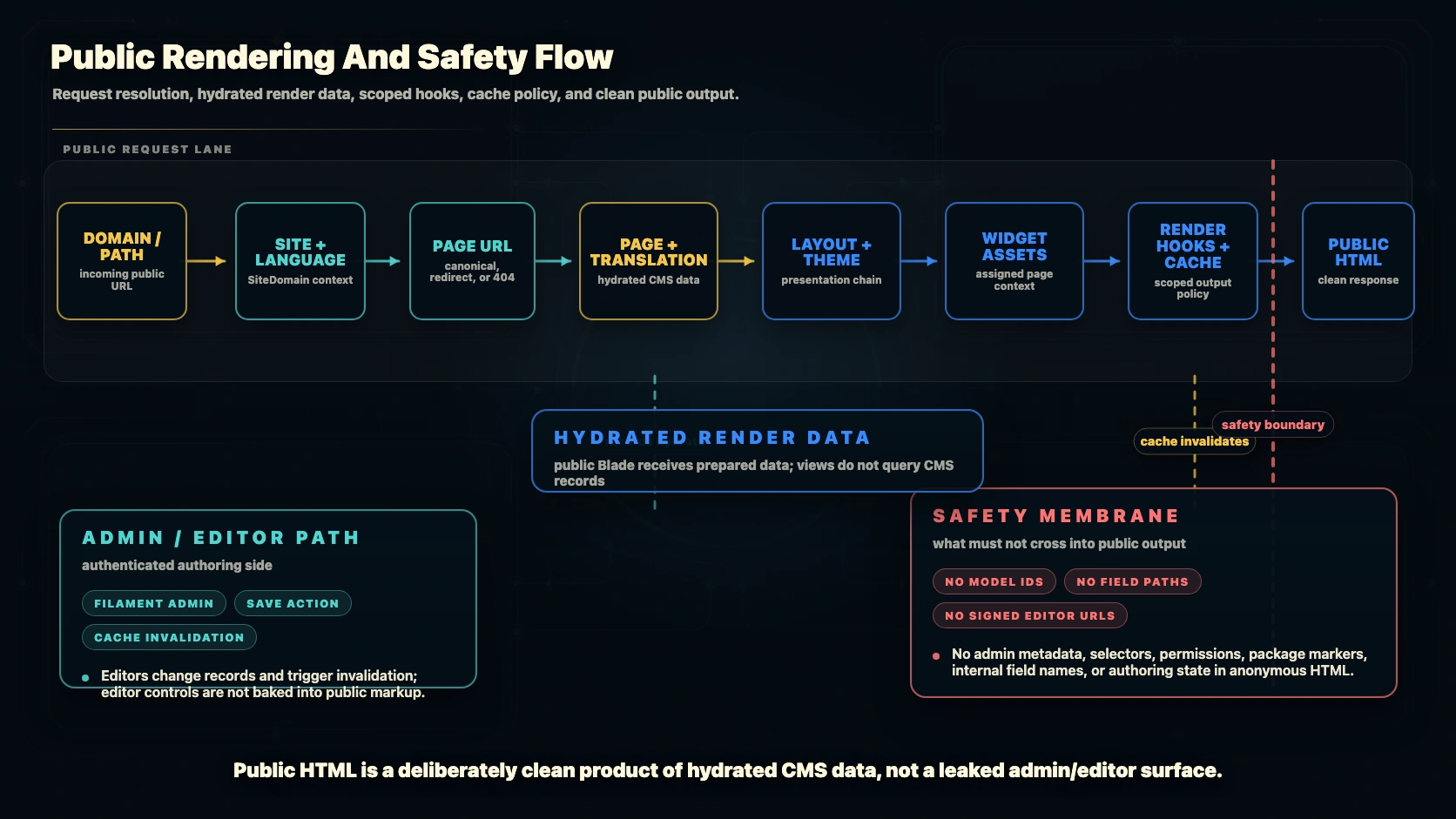
SEO work gets harder when content lives in one place, routing in another, and cached output somewhere else. Capell keeps those concerns connected through the Laravel CMS model.
Teams can ship metadata, structured content, sitemap-ready URLs, search indexing, AI discovery markdown, and cache refreshes without giving up frontend ownership.
Search visibility starts in the CMS model
Good CMS SEO depends on stable URLs, clean HTML, useful metadata, fast delivery, and internal links that help visitors and crawlers understand the site.
SEO and performance questions
Use this page when SEO, cache, search, and AI discovery need a stable relationship to CMS records.
Does Capell replace frontend performance work?
No. Developers still own markup, CSS, assets, and frontend decisions. Capell keeps CMS-driven data and cache invalidation visible.
Can pages have unique SEO metadata?
Yes. Titles, descriptions, summaries, images, alternate feeds, and structured data can be seeded or edited through CMS records.
What makes this different from a plugin?
SEO capability arrives as Laravel packages around the same page model, so it can be reviewed, tested, deployed, and removed like application code.
Make every CMS page easier to discover
The next practical path is search: decide how visitors find content once the site has enough CMS-backed pages to explore.