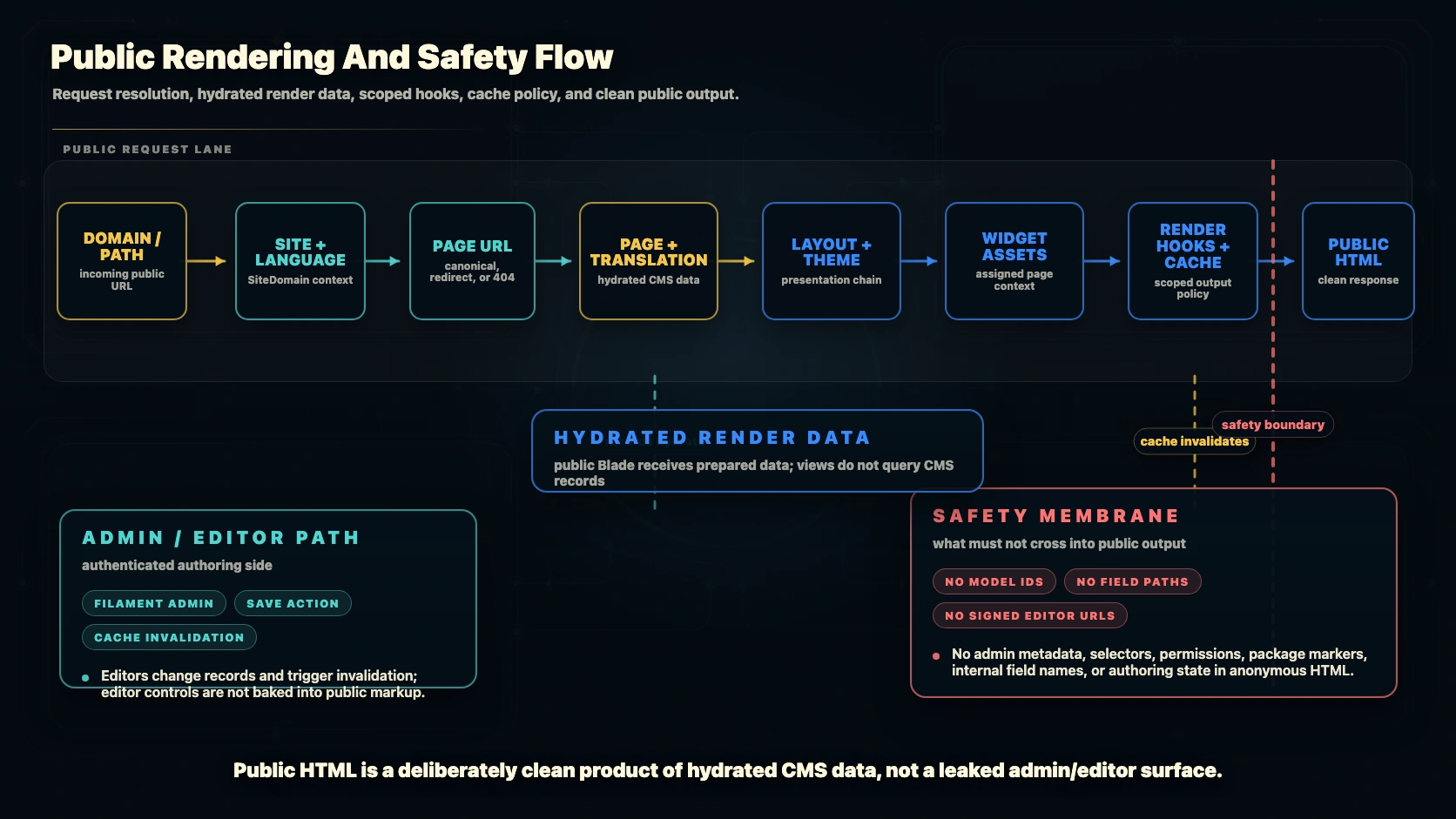
Performance controls for public CMS pages
CMS pages need to stay fast after editors, packages, media, and campaigns enter the system. Capell keeps performance decisions connected to the records that affect public output.
Static HTML cache, critical CSS checks, frontend runtime assets, media choices, and route-level smoke tests can all remain part of the Laravel app workflow.
Performance work that should stay connected
Capell does not replace frontend engineering. It gives CMS-driven performance work a clear relationship to pages, sections, assets, and publishing operations.
Performance questions
Capell keeps performance work reviewable because public rendering remains in the Laravel project.
Does Capell generate the frontend?
No. Developers own frontend output. Capell provides CMS data, cache hooks, and resource registration so the app can render quickly.
Can cached pages stay fresh?
Yes. Publishing and content changes can invalidate or regenerate public HTML cache through Laravel-owned operations.
How do packages affect performance?
Package resources should be registered deliberately and tested against public pages so optional capability does not silently bloat every route.
Keep CMS pages fast after launch
Pair performance with SEO and operations so page changes trigger the right cache, sitemap, discovery, and smoke-check behavior.